Last updated on 2025-11-23T21:10:49+08:00
1. TODO
2. 脑图
Xmind
Edraw

Hexo 地址
👉 http://blog.wangjia.ink/2025/08/31/源码:java.util.concurrent.locks.AbstractQueuedSynchronizer.ConditionObject源码解析/
3. 基础部分
3.1. AbstractQueuedSynchronizer.ConditionObject 概述
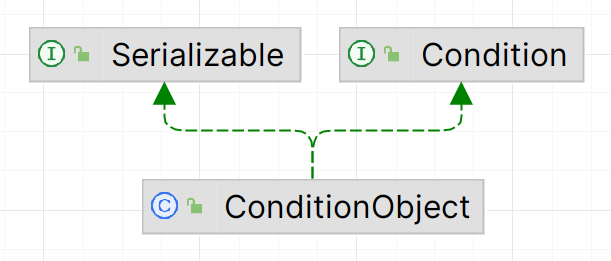
ConditionObject 是一个具体类,是 java.util.concurrent.locks.AbstractQueuedSynchronizer. 的普通内部类,实现了 java.util.concurrent.locks.Condition、java.io.Serializable
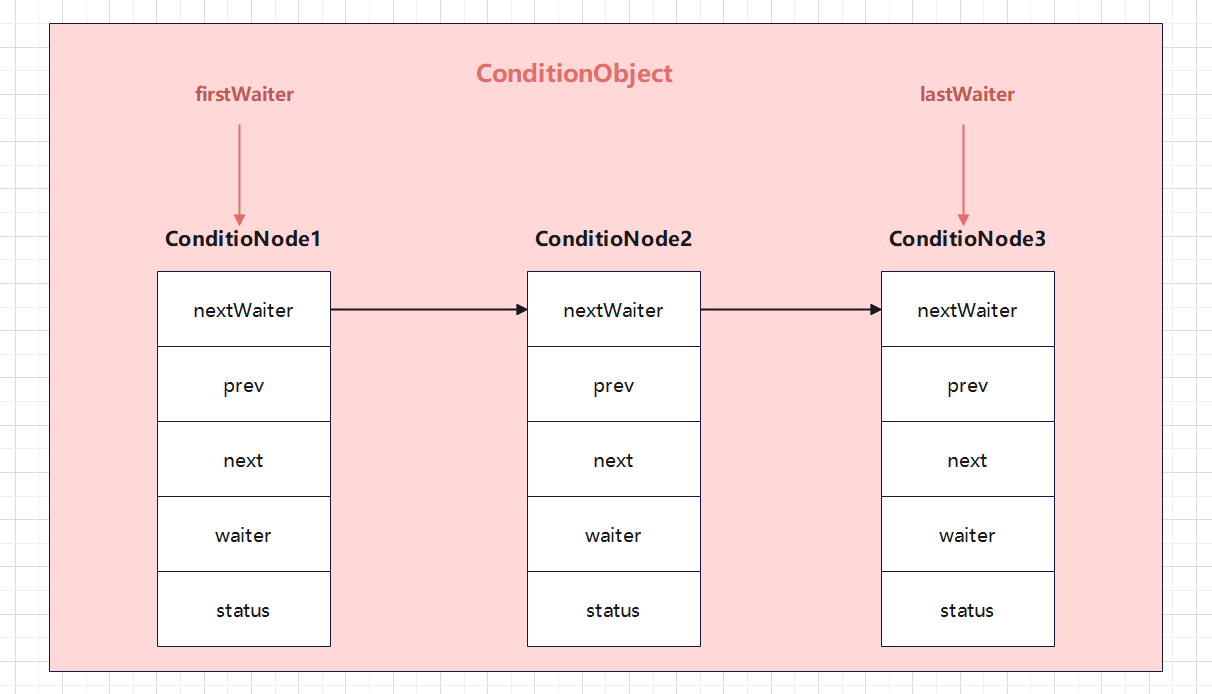
ConditionObject 维护了一个由 AbstractQueuedSynchronizer.ConditionNode 构建的,基于单向链表的队列。所谓的 “AQS 的条件队列” 其实就是在说 ConditionObject 维护的这条件队列
[!NOTE] 注意事项
- 详见源码:
AbstractQueuedSynchronizer
obsidian 内部链接:
- 源码:java.util.concurrent.locks.AbstractQueuedSynchronizer源码解析
Hexo 链接:
- http://blog.wangjia.ink/2025/09/01/源码:java.util.concurrent.locks.AbstractQueuedSynchronizer源码解析/
- 详见源码:
Condition
obsidian 内部链接:
- 源码:java.util.concurrent.locks.Condition源码解析
Hexo 链接:
- http://blog.wangjia.ink/2025/08/31/源码:java.util.concurrent.locks.Condition源码解析/
- 详见源码:
Serializable
obsidian 内部链接:
- 源码:java.io.Serializable源码解析
Hexo 链接:
- http://blog.wangjia.ink/2025/10/28/源码:java.io.Serializable源码解析/
4. 核心属性
1
2
3
4
5
|
private transient ConditionNode firstWaiter;
private transient ConditionNode lastWaiter;
|
5. 具体方法
5.1. 具体方法(无)
5.1.1. private int enableWait(ConditionNode node)
private int enableWait(ConditionNode node) 用于 把当前线程包装成一个 ConditionNode,然后将该节点链接到条件队列(单向链表)中,并释放锁资源
1
2
3
4
5
6
7
8
9
10
11
12
13
14
15
16
17
18
19
20
21
22
23
24
25
26
27
28
29
30
31
32
33
34
35
36
37
38
39
40
41
42
43
44
45
46
47
48
49
50
51
52
53
54
|
private int enableWait(ConditionNode node) {
if (isHeldExclusively()) {
node.waiter = Thread.currentThread();
node.setStatusRelaxed(COND | WAITING);
ConditionNode last = lastWaiter;
if (last == null)
firstWaiter = node;
else
last.nextWaiter = node;
lastWaiter = node;
int savedState = getState();
if (release(savedState))
return savedState;
}
node.status = CANCELLED;
throw new IllegalMonitorStateException();
}
|
5.1.2. private boolean canReacquire(ConditionNode node)
private boolean canReacquire(ConditionNode node) 用于 判断某个在 Condition 上等待的节点,被 Condition 的 signal 后,是否已经链接到同步队列中
需要注意的是,线程在被 Condition 的 signal() 唤醒后,按设计一定会转移到同步队列中去竞争锁。但在高并发环境下,节点的入队过程并非一步到位,可能出现链表指针尚未完全修复或节点已被取消等等 “中间态”。因此,需要通过这个方法进行校验,确保节点确实已经稳定地进入同步队列,才算真正具备重新竞争锁的资格。
1
2
3
4
5
6
7
8
9
10
11
12
13
14
15
16
17
18
19
| private boolean canReacquire(ConditionNode node) {
Node p;
return node != null && (p = node.prev) != null &&
(p.next == node || isEnqueued(node));
}
|
5.1.3. private void doSignal(ConditionNode first, boolean all)
1
2
3
4
5
6
7
8
9
10
11
12
13
14
15
16
17
18
19
20
21
22
23
24
| private void doSignal(ConditionNode first, boolean all) {
while (first != null) {
ConditionNode next = first.nextWaiter;
if ((firstWaiter = next) == null)
lastWaiter = null;
if ((first.getAndUnsetStatus(COND) & COND) != 0) {
enqueue(first);
if (!all)
break;
}
first = next;
}
}
|
5.2. 具体方法(实现)
5.2.1. Condition 中的方法实现
5.2.1.1. public final void await()
1
2
3
4
5
6
7
8
9
10
11
12
13
14
15
16
17
18
19
20
21
22
23
24
25
26
27
28
29
30
31
32
33
34
35
36
| public final void await() throws InterruptedException {
if (Thread.interrupted())
throw new InterruptedException();
ConditionNode node = new ConditionNode();
int savedState = enableWait(node);
LockSupport.setCurrentBlocker(this);
boolean interrupted = false, cancelled = false, rejected = false;
while (!canReacquire(node)) {
if (interrupted |= Thread.interrupted()) {
if (cancelled = (node.getAndUnsetStatus(COND) & COND) != 0)
break;
} else if ((node.status & COND) != 0) {
try {
if (rejected)
node.block();
else
ForkJoinPool.managedBlock(node);
} catch (RejectedExecutionException ex) {
rejected = true;
} catch (InterruptedException ie) {
interrupted = true;
}
} else
Thread.onSpinWait();
}
LockSupport.setCurrentBlocker(null);
node.clearStatus();
acquire(node, savedState, false, false, false, 0L);
if (interrupted) {
if (cancelled) {
unlinkCancelledWaiters(node);
throw new InterruptedException();
}
Thread.currentThread().interrupt();
}
}
|
5.2.1.2. public final void awaitUninterruptibly()
1
2
3
4
5
6
7
8
9
10
11
12
13
14
15
16
17
18
19
20
21
22
23
24
25
26
27
28
29
30
31
32
33
34
35
36
37
38
39
40
41
42
43
44
45
46
47
48
49
50
51
52
53
| public final void awaitUninterruptibly() {
ConditionNode node = new ConditionNode();
int savedState = enableWait(node);
LockSupport.setCurrentBlocker(this);
boolean interrupted = false, rejected = false;
while (!canReacquire(node)) {
if (Thread.interrupted())
interrupted = true;
else if ((node.status & COND) != 0) {
try {
if (rejected)
node.block();
else
ForkJoinPool.managedBlock(node);
} catch (RejectedExecutionException ex) {
rejected = true;
} catch (InterruptedException ie) {
interrupted = true;
}
} else
Thread.onSpinWait();
}
LockSupport.setCurrentBlocker(null);
node.clearStatus();
acquire(node, savedState, false, false, false, 0L);
if (interrupted)
Thread.currentThread().interrupt();
}
|
5.2.1.3. public final long awaitNanos(long nanosTimeout)
1
2
3
4
5
6
7
8
9
10
11
12
13
14
15
16
17
18
19
20
21
22
23
24
25
26
27
28
| public final long awaitNanos(long nanosTimeout)
throws InterruptedException {
if (Thread.interrupted())
throw new InterruptedException();
ConditionNode node = new ConditionNode();
int savedState = enableWait(node);
long nanos = (nanosTimeout < 0L) ? 0L : nanosTimeout;
long deadline = System.nanoTime() + nanos;
boolean cancelled = false, interrupted = false;
while (!canReacquire(node)) {
if ((interrupted |= Thread.interrupted()) ||
(nanos = deadline - System.nanoTime()) <= 0L) {
if (cancelled = (node.getAndUnsetStatus(COND) & COND) != 0)
break;
} else
LockSupport.parkNanos(this, nanos);
}
node.clearStatus();
acquire(node, savedState, false, false, false, 0L);
if (cancelled) {
unlinkCancelledWaiters(node);
if (interrupted)
throw new InterruptedException();
} else if (interrupted)
Thread.currentThread().interrupt();
long remaining = deadline - System.nanoTime();
return (remaining <= nanosTimeout) ? remaining : Long.MIN_VALUE;
}
|
5.2.1.4. public final boolean await(long time, TimeUnit unit)
1
2
3
4
5
6
7
8
9
10
11
12
13
14
15
16
17
18
19
20
21
22
23
24
25
26
27
28
| public final boolean await(long time, TimeUnit unit)
throws InterruptedException {
long nanosTimeout = unit.toNanos(time);
if (Thread.interrupted())
throw new InterruptedException();
ConditionNode node = new ConditionNode();
int savedState = enableWait(node);
long nanos = (nanosTimeout < 0L) ? 0L : nanosTimeout;
long deadline = System.nanoTime() + nanos;
boolean cancelled = false, interrupted = false;
while (!canReacquire(node)) {
if ((interrupted |= Thread.interrupted()) ||
(nanos = deadline - System.nanoTime()) <= 0L) {
if (cancelled = (node.getAndUnsetStatus(COND) & COND) != 0)
break;
} else
LockSupport.parkNanos(this, nanos);
}
node.clearStatus();
acquire(node, savedState, false, false, false, 0L);
if (cancelled) {
unlinkCancelledWaiters(node);
if (interrupted)
throw new InterruptedException();
} else if (interrupted)
Thread.currentThread().interrupt();
return !cancelled;
}
|
5.2.1.5. public final boolean awaitUntil(Date deadline)
1
2
3
4
5
6
7
8
9
10
11
12
13
14
15
16
17
18
19
20
21
22
23
24
25
26
| public final boolean awaitUntil(Date deadline)
throws InterruptedException {
long abstime = deadline.getTime();
if (Thread.interrupted())
throw new InterruptedException();
ConditionNode node = new ConditionNode();
int savedState = enableWait(node);
boolean cancelled = false, interrupted = false;
while (!canReacquire(node)) {
if ((interrupted |= Thread.interrupted()) ||
System.currentTimeMillis() >= abstime) {
if (cancelled = (node.getAndUnsetStatus(COND) & COND) != 0)
break;
} else
LockSupport.parkUntil(this, abstime);
}
node.clearStatus();
acquire(node, savedState, false, false, false, 0L);
if (cancelled) {
unlinkCancelledWaiters(node);
if (interrupted)
throw new InterruptedException();
} else if (interrupted)
Thread.currentThread().interrupt();
return !cancelled;
}
|
5.2.1.6. public final void signal()
1
2
3
4
5
6
7
| public final void signal() {
ConditionNode first = firstWaiter;
if (!isHeldExclusively())
throw new IllegalMonitorStateException();
if (first != null)
doSignal(first, false);
}
|
5.2.1.7. public final void signalAll()
1
2
3
4
5
6
7
| public final void signalAll() {
ConditionNode first = firstWaiter;
if (!isHeldExclusively())
throw new IllegalMonitorStateException();
if (first != null)
doSignal(first, true);
}
|